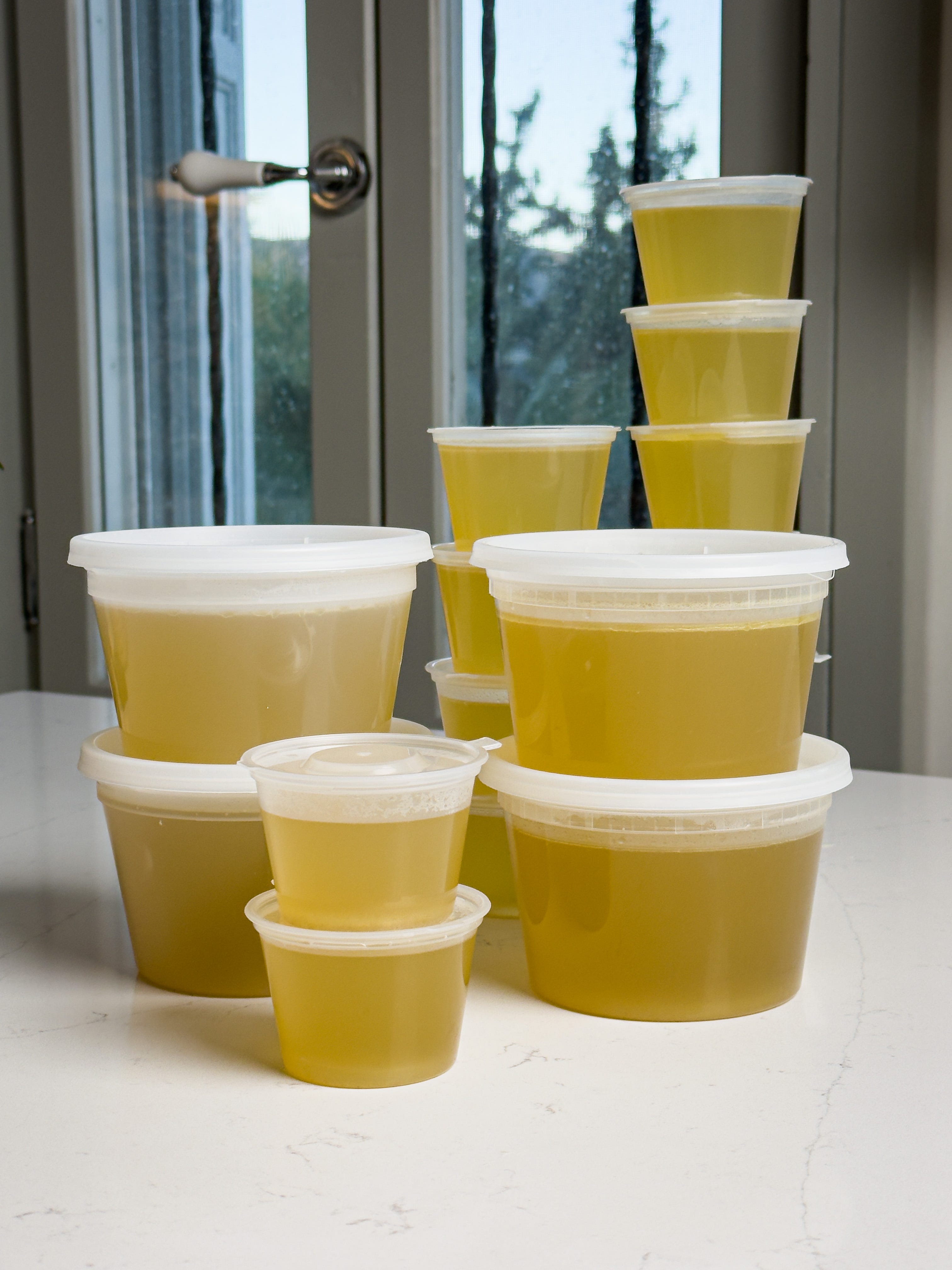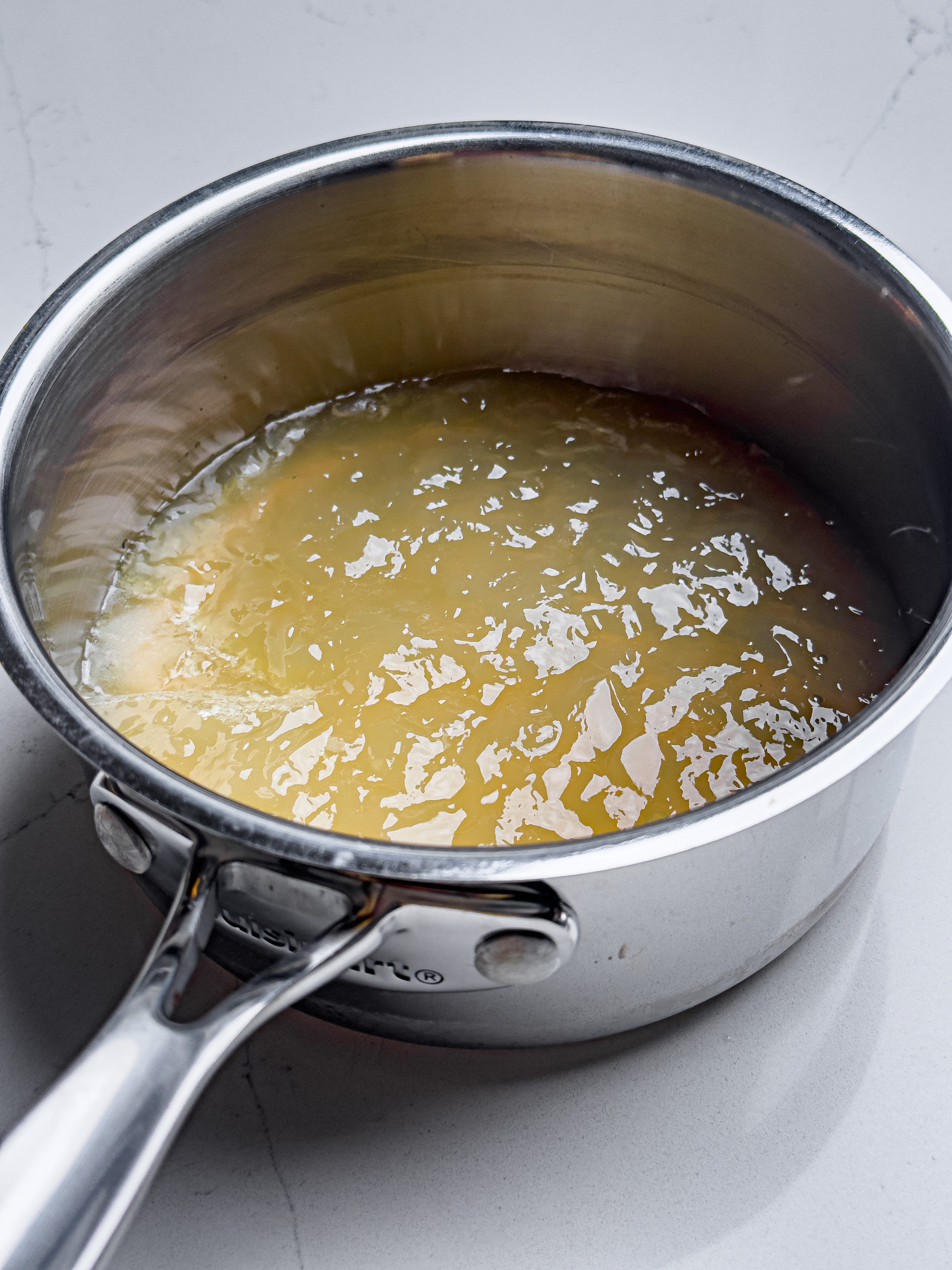
The classic whole chicken + vegetables + soup method is great for families or weekends. In a typical home kitchen, you boil the bird for soup. In a Turkish kitchen, we take it a step further, using the leftover shredded meat and the reserved liquid to make tavuk pilav. It’s a classic cycle of efficiency, and it works.
But if you’re cooking for yourself, and you don’t want to be managed by a mountain of leftover chicken meat, there’s another way.
There is a fundamental difference between a stock made from a whole chicken and a stock made with intention. Especially in winter, I make stock because I want stock.
The gelatinous stock is the technician’s choice. By using high-collagen parts like wings and feet (if you can find them), you create a liquid that actually changes the physics of your food. When cold, it’s a solid jelly. When hot it has a lip-smacking richness that acts as a natural emulsion. It makes sauces glossy and gives everything it touches a certain weight and presence. It’s about mouthfeel as much as flavor.
Then, there is the classic whole-bird stock. This is the one you make for elegance and clarity. It’s light, aromatic, and especially in winter it feels medicinal. In Turkey, if you’re sick, someone brings you chicken soup. No one asks why; we just know.
A great chicken stock is not about flavoring the water.
It is about extracting gelatin cleanly from the right parts of the chicken.


Gelatinous chicken stock
INGREDIENTS:
3 kg chicken wings, necks, feet or frames
3 large onions, halved
2 large leeks, white and pale green only, coarsely chopped
2 celery, coarsely chopped
3 large carrots, coarsely chopped
Thumb sized ginger, sliced, optional
Aromatics: 1 Bay leaf + fresh thyme + peppercorns + parsley stems
4-5 litres cold filtered water
What I use at home
If you do not butcher chickens, or can’t find feet or necks, you can buy extra wings. Ask your butcher to remove breasts and thighs for cooking and use the rest (carcass and wings) for the stock.
METHOD
Soak bones in cold running water for 30 minutes before cooking to remove all traces of blood.
Place the chicken parts in a large pot and cover fully with cold water.
Bring slowly to 85–90 °C over medium-low heat. This will take at least 45 minutes. Never boil.
As the liquid approaches a simmer, skim the surface a couple of times to remove the scum. Do not stir if you want your stock to stay clear.
It’s much easier to skim thoroughly when the pot contains only chicken. Once the liquid is clean, add the vegetables and aromatics.
If you want to rescue some wing meat, lift the wings about 30 minutes after the pot reaches a gentle simmer, then return the bones to the pot.
Maintain the same gentle temperature, uncovered, for 3–4 hours. The surface should show only an occasional bubble.
Always keep your bones and vegetables fully submerged. If needed, top up with boiling water.
Taste. It should be deeply chicken-forward, slightly sweet, clean, and restrained.
Remove from heat and let settle for 20 minutes.
To strain, do not pour the pot through a sieve. Use a ladle to gently move the liquid through a chinois lined with a damp muslin cloth or coffee filter.
Cool rapidly and refrigerate. When cold, it should wobble.
Once the stock is fully chilled, the fat will rise and set into a solid cap. You can lift it off easily with a spoon or use a fat separator after straining.


Classic homemade chicken stock
INGREDIENTS:
1 whole chicken (1.5–2 kg)
1 onion, coarsely chopped
2 leeks, coarsely chopped
3 celery stalks, coarsely chopped
Thumb-sized ginger, sliced
Aromatics: 1 Bay leaf, fresh thyme, peppercorns, parsley stems
Peel of 1 tomato, only in summer, optional
Cold water, to cover
METHOD
Place the whole chicken and vegetables in a large pot and cover with cold water.
Bring up very slowly to a gentle simmer, skimming as foam rises. Once the pot reaches a bare simmer, start timing.
After 45–60 minutes at a gentle simmer, the chicken will be cooked through but not falling apart. Lift the whole chicken out carefully and let it cool slightly.
Remove the usable meat. Reserve for soups, salads, chicken rice, or other dishes.
Return the carcass, skin, bones, and connective tissue to the pot. Add the aromatics.
Continue simmering for 1½–2½ hours more. Strain and cool.
How to Use It
- Cook rice and grains like bulgur, barley, farro, freekeh with it
- A few tablespoons to finish vegetables
- A splash in the pan instead of water to create a pan sauce
- Use in braises and stews and soups
⁃ Simple brothy meals