Some recipes stay with you because they are useful. Others because they hold an entire place inside them. This traditional Turkish pickle recipe does both.
It was late summer on Saros Bay, and Hande Bozdoğan had already settled into her rhythm. Mornings began with the sea, rowing her boat across the quiet bay or swimming in her saltwater pool, before she moved on to the farm.
She harvested only what was ready, filling baskets with heirloom beans, yellow courgettes, long sweet peppers, tomatoes, cucumbers, aubergines, melons and watermelons. It was the sort of abundance that made you slow down because rushing felt disrespectful.
It was the first time I had seen purple beans, and the yellow courgettes were new to me too. We picked until our arms were full, then carried everything back to the house.
The house itself surprised me. It was a modern, single-storey space designed around ease, with plenty of natural light but none of the heat, nostalgic terrazzo tiles and a kitchen made for living rather than performing.
The worktops formed one continuous cutting board, with discreet openings for scraps and knives. Wide drawers held everything without clutter. The equipment had been pared back to the essentials: one good tool for each job and nothing unnecessary. It was the kind of kitchen you design once you know yourself well enough to understand how you really move.
The meals were precise and unforgettable. Salmon was simply steamed with the purple beans and yellow courgettes and served with basmati rice. It was light, clean and tasted entirely of the garden. Later came a dessert with the refinement of a Turkish muhallebi, just sweet enough and neither heavy nor loose. Cooking stripped back to what mattered.
That weekend, Hande taught me how to make Turkish pickles. Cucumbers and peppers from her land went into jars as naturally as if there were no other possible destination for them. Watching her, I suddenly wondered why I had ever bought pickles.
Her way of living was disciplined without feeling severe. There was steady work until lunch, then a return to the fields until the light shifted. Afternoons ended with a gin and tonic and evenings with music. At night, she played the cello alone on her farm in Saros. It felt like the most elegant closing note to a life built with purpose.
For me, it was a glimpse of something close to perfection. A way of living that was minimal yet abundant, practical yet lyrical. That weekend remains one of the clearest inspirations I have carried back into my own kitchen, along with this recipe.
Classic Turkish Pickles
Makes one 1-litre jar
INGREDIENTS:
4 dried chickpeas
Green peppers, cucumbers or white cabbage, enough to pack the jar firmly
6 garlic cloves, lightly crushed
1 small sprig fresh rosemary
25 g pickling salt
5 g (1 tsp) sugar
120 ml red wine or apple cider vinegar
500 ml filtered water, at room temperature (adjusted based on packing)


METHOD
Sterilise a 1-litre glass jar and its lid in boiling water, then leave them to air-dry.
Wash the vegetables thoroughly and discard any that are bruised or damaged. If using peppers, trim the stems. If using cucumbers, remove a thin slice from the blossom end of each one. If using cabbage, remove the core and cut the leaves into pieces that can be packed firmly into the jar.
Add chickpeas to the base of the jar.
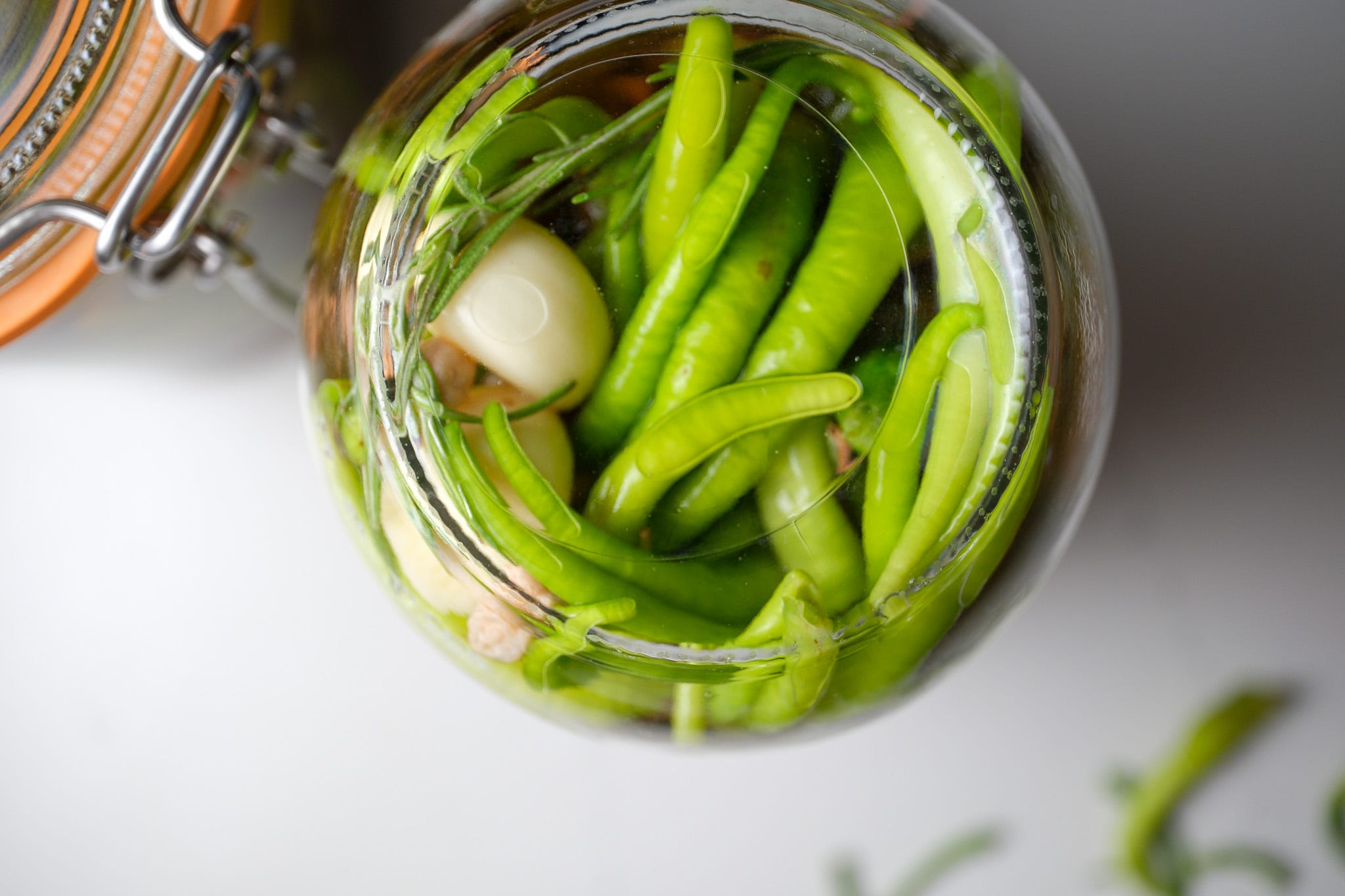
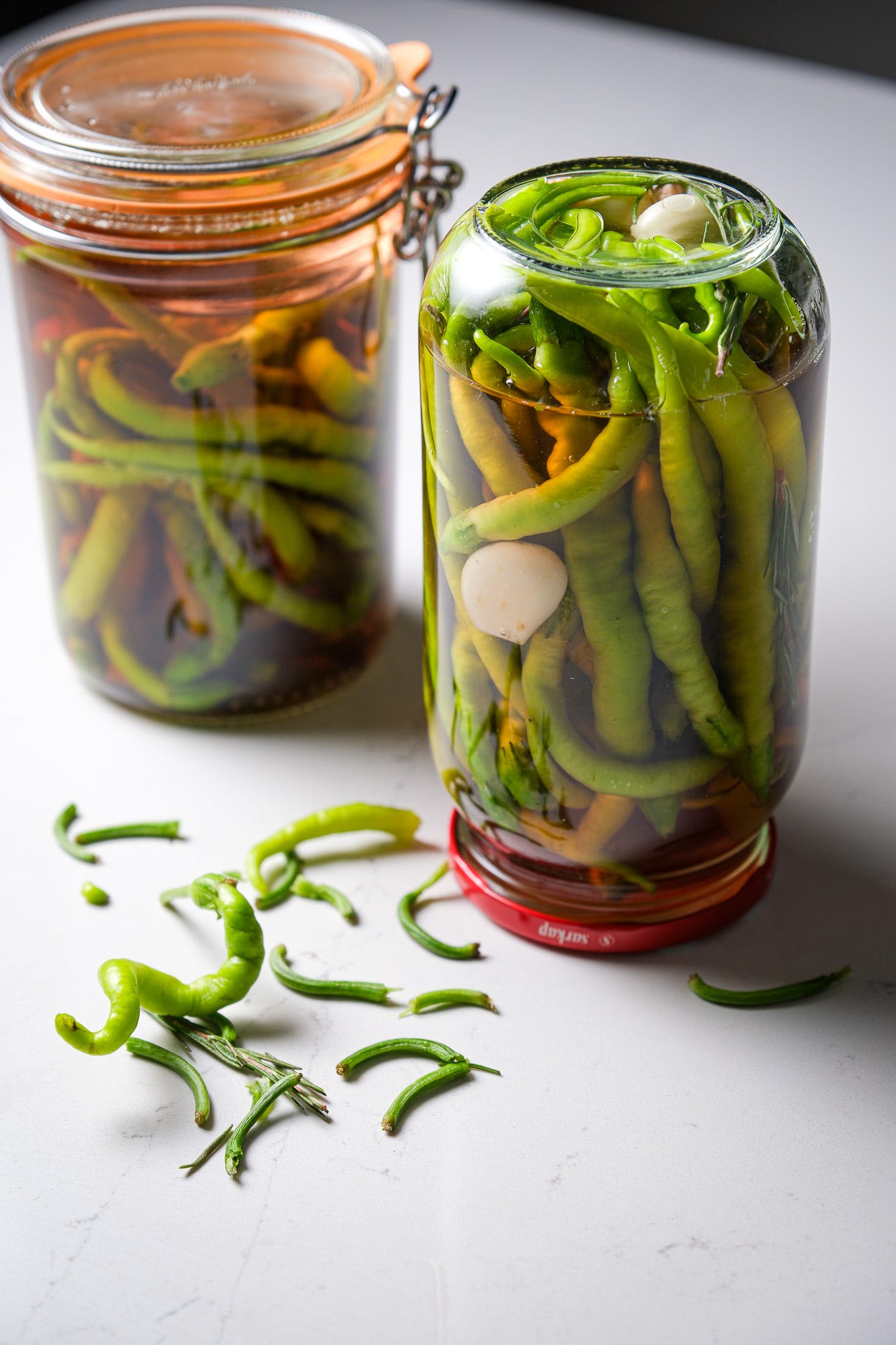
Pack vegetables vertically and tightly with garlic and rosemary, leaving 1–2 cm headspace.
Dissolve the salt and sugar completely in the filtered water, then stir in the vinegar.
Pour the brine over the packed vegetables until completely submerged, maintaining headspace. Add a fermentation weight or a sealed, brine-filled bag to keep vegetables fully submerged.
Leave the jar at room temperature, away from direct sun, for about 7–14 days.
Over time the brine will turn cloudy, the peppers will change color.