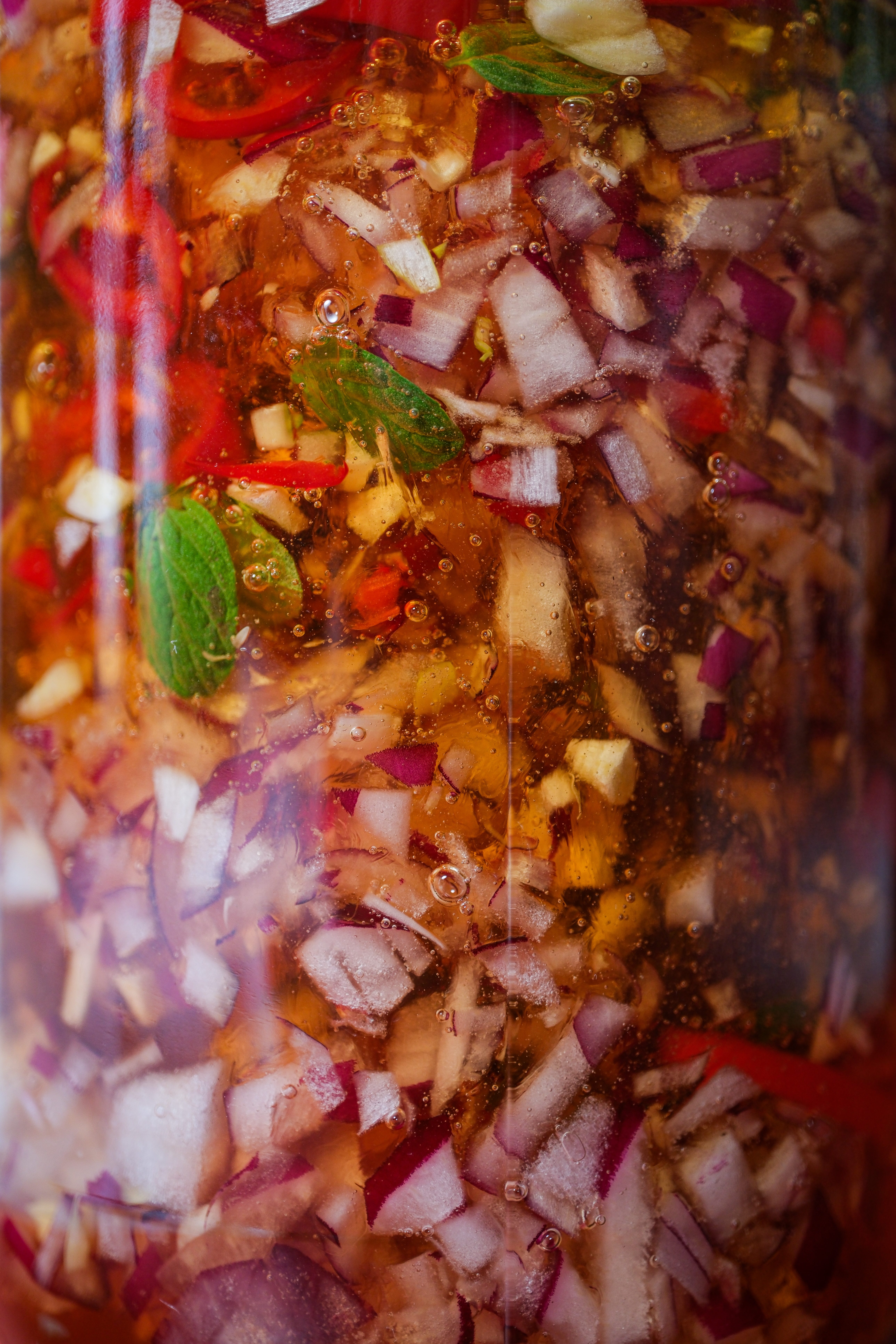
It’s just honey, chilies, and aromatics, left alone for a few days. The honey softens, the heat settles in, and everything rounds out quietly.
I often make it planning to turn it into butter later on. But it’s just as useful kept as is, used a spoonful at a time.
Fermented Chili Honey
INGREDIENTS:
3 whole dried chilies or 4 fresh red chilies
3 garlic cloves
1 small red onion
2 sprigs thyme
2 sprigs rosemary
300-350 ml honey (enough to fully submerge)
METHOD
Place the chilies, garlic, onion, thyme, and rosemary in a clean, sterilised glass jar. Pack gently; do not crush or bruise the aromatics.
Pour over the honey until all the solids are fully submerged. At first it may look like there isn’t quite enough honey. Give it a few minutes, then stir gently and tap the jar on the counter to help everything settle. The honey will sink, the vegetables will soften slightly, and the level will even out. Add more honey only if needed.
Seal the jar loosely and keep it at room temperature, ideally somewhere between 18–22°C and out of direct light.
Once a day, open the jar briefly to release any built-up gas. Gently stir or tilt the jar to make sure everything remains submerged. Nothing should be sitting above the surface of the honey.
After 48 hours, taste. At this stage the honey should be aromatic, lightly spicy, and just beginning to show acidity. For more depth and roundness, continue fermenting for up to five days, tasting daily. Stop when the balance of heat, sweetness, and acidity feels right to you.
At this point, you can keep the honey as is, or you can strain it.
Once ready, seal the jar tightly and refrigerate. The flavour will continue to mellow, but fermentation will slow significantly.
Stored in the fridge, it keeps well for 2–3 months. If you ever see mould on the surface, discard the batch.


Kitchen Notes
Red onion is optional. It adds a deeper, more savoury edge, which can be great in some contexts. If you’re planning to use this mostly with eggs, toast, yogurt, or butter, you may prefer to leave it out. Try both and see where it fits in your kitchen.
Make sure the herbs are washed and fully dried before adding them. If using dried chilies, rinse briefly and pat dry to remove surface dust.
The most important thing is keeping everything submerged. If solids sit exposed to air for extended periods, mould can occasionally develop. A gentle stir or tilt now and then usually prevents this.
How to Use It
I think of this fermented chili honey as a seasoning rather than a condiment.
A small spoon stirred into a simple vinaigrette with lemon or vinegar, olive oil, and salt works beautifully with bitter greens, radicchio, endive, turnips, or shaved cabbage.
A few drops over roasted vegetables go a long way, especially with some crumbled cheese and toasted nuts.
It’s excellent with eggs. Just a little over fried or over-easy eggs, with olive oil and flaky salt, works best when there’s a crisp edge and a runny yolk to balance the sweetness.
And it’s very good with cheese: beyaz peynir, feta, goat cheese, halloumi, baked brie, even grilled cheese, either inside or brushed on top.
Fermented Chili Honey Butter
INGREDIENTS:
100 g unsalted butter
2 tsp fermented chili honey
A generous pinch of salt
METHOD
This is the most natural place this honey ends up in my kitchen.
I let the butter soften first, until it’s fully relaxed and easy to work with. If the fermented honey contains solids, I either purée it until smooth or strain it. You want everything to integrate easily into the fat.
The honey goes into the butter gradually, a little at a time, with a generous pinch of salt. I taste as I go. The goal isn’t sweetness; it’s balance. The butter should taste savoury first, with heat and sweetness following quietly behind. If it feels too forward, a squeeze of lemon usually brings it back into line.
Once it tastes right, I spoon it onto parchment paper or stretch film, roll it into a compact log, and chill it until firm. From there it can be sliced into coins or frozen in small moulds.
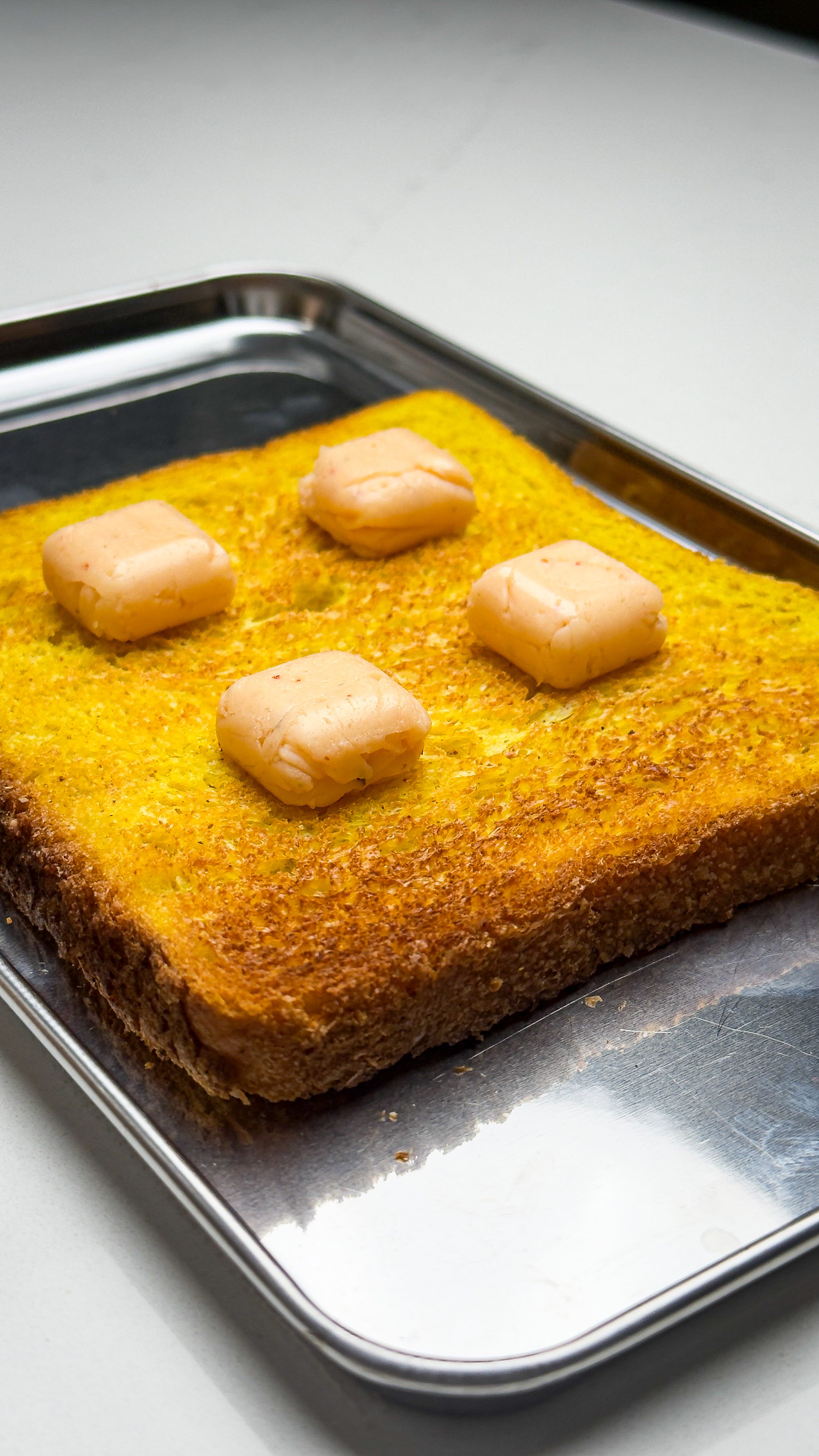
This butter is especially good melted over corn or potatoes, used to finish roasted vegetables, or simply spread on warm toast with flaky salt.