


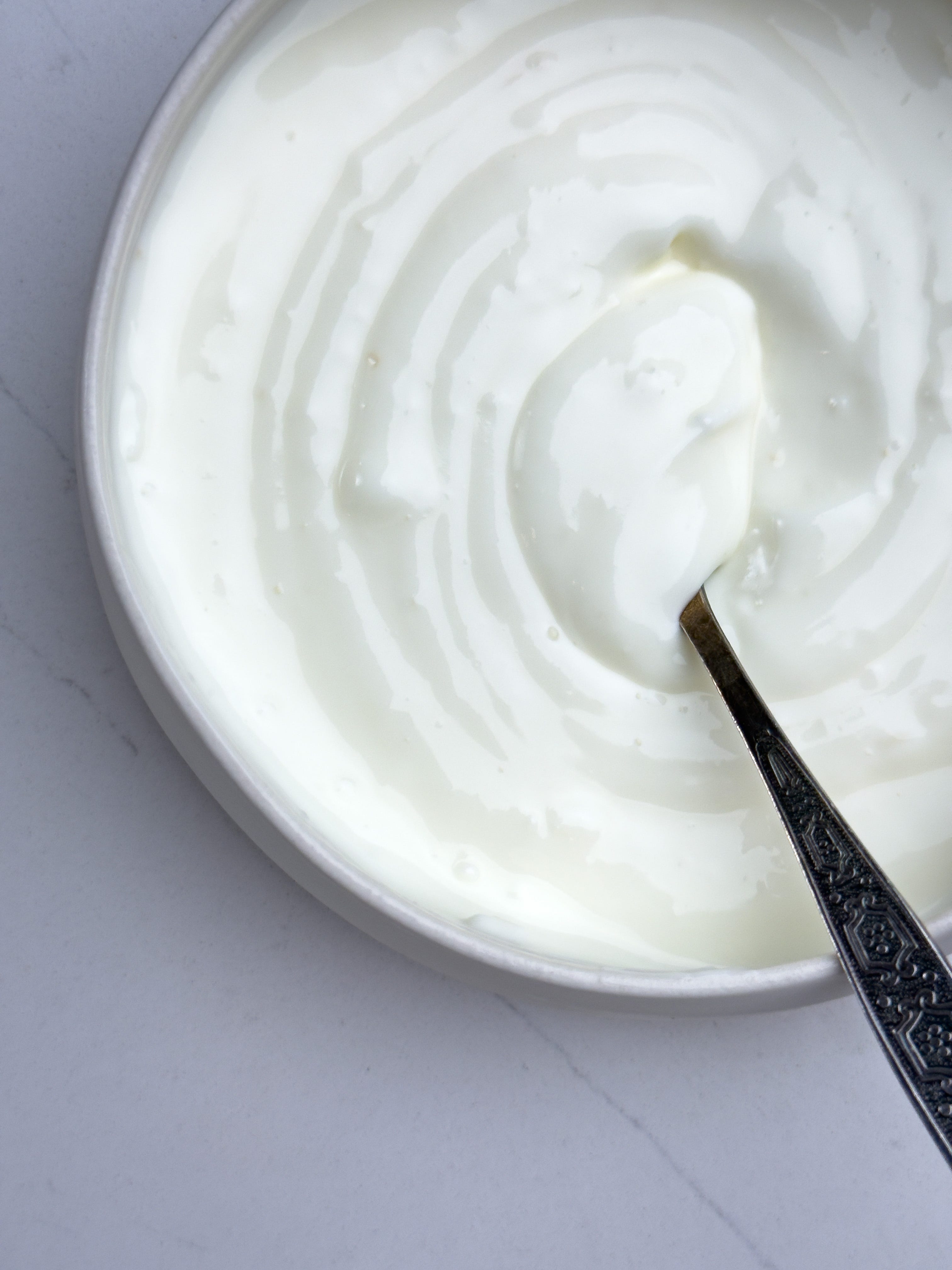
There are a few things I always want to have in the fridge. Yogurt is one of them.
Real yogurt is alive. It’s full of flavor, full of bacteria, full of memory.
In Turkish homes, yogurt is not a side dish, it’s a staple. You eat it by the spoon, fold it into meze, drop it cold into hot soup. You use it daily, and then you use it again to make the next batch. Yogurt becomes its own ritual. It passes itself forward.
Making yogurt teaches slowness. It’s a small, grounding act that repeats itself. Like sourdough, but much easier.
I like mine creamy, spoonable, rich. I strain it until it holds shape a bit. I use raw milk and I make it once a week. It doesn’t take much effort. It almost makes itself. You just have to be there for the beginning.
In Turkish homes, yogurt is part of the flow. You boil the milk, you let it cool, you stir in a spoonful from the last batch. You cover it, leave it alone overnight, and in the morning, it’s set. You chill it to let the texture settle. Then you strain it, if you’re like me, for another 8 to 12 hours. Thick, but not dry. Creamy, but not whipped. Then you repeat.
What I love most is that it carries itself forward. The next week, you use a spoonful from this batch to make the next. That’s the part that gets me every time—it continues. There’s something beautiful about that.
This is how I make mine.


Home-made Yogurt
INGREDIENTS:
3 liters fresh whole milk
3 tablespoons plain yogurt with live active cultures (full-fat, unsweetened)
EQUIPMENT
– Heavy-bottomed stainless steel pot, güveç pot, or any thick, non-reactive pot
– Cheesecloth or fine muslin
– Cooking thermometer
– Fine mesh strainer or colander
– Large bowl
– Whisk or spoon
– Jars
METHOD
Start with the best quality full-fat milk you can find. Pour the raw milk through a cheesecloth or fine sieve to remove any dust or residue. Clean milk makes clean yogurt.
I usually lay a dry wooden spoon across the top of the pot while the milk is heating. It’s a classic kitchen trick to stop the milk from boiling over. If your heat is high and you just forget, the milk will win, but it buys you a few extra seconds to turn down the heat before things get messy. It’s one of those small rituals that makes the whole process feel right, almost like a blessing.
Pour the milk into your pot and slowly heat it to 90–95°C, stirring occasionally to prevent scorching.
Once it reaches temperature, keep it at a gentle simmer for about 5-10 minutes.
Let the milk cool to 43–45°C. You can leave it on the counter or place the pot in an ice bath to bring the temperature down faster. If there is no thermometer nearby, use the finger test. It should feel warm but not hot enough to sting.
Take a small bowl and whisk two tablespoons of plain yogurt with a little of the warm milk. This tempers the starter so it blends smoothly. Pour that back into the main pot and stir gently.
Leave the mixture in the pot to ferment as one large batch. I prefer this because I strain my yogurt later to get that thick, velvety texture. If you prefer grab-and-go portions and don't plan on straining, pour the prepared milk into clean glass jars.
Cover the pot with a clean kitchen towel instead of a lid. Lids trap steam and make the yogurt watery.
In winter, preheat the oven to 50°C, then turn it off completely and leave the oven light on. Place the covered pot inside, usually overnight. If the kitchen is cold, let it ferment for up to 12–14 hours. In the summer, 6–8 hours is usually enough.
Once it sets, put it in the fridge for a few hours to firm up. For thick and creamy yogurt, strain it through a muslin cloth for another 6 to 12 hours hours in the fridge.
Line a colander with cheesecloth, place it over a bowl, and pour in the chilled yogurt.
You can also experiment by combining different types of milk, buffalo, goat, sheep, depending on what’s available where you live. Each one brings its own texture and flavor.
And always save a few tablespoons from your best batch to use as your next starter. Yogurt keeps going. That’s the beauty of it.
What to Do with Yogurt Whey
The liquid left over from straining is acid whey. It is full of protein and good bacteria. Keep it in a jar in the fridge for up to two weeks or freeze it in ice trays for six months.
If the smell becomes unpleasantly sour or you see mold, toss it. Use it to replace water in bread or pancake dough for better flavor. It also makes a great brine for chicken or a flavor booster for soups and stews. It also makes a great brine for chicken or a natural kickstarter for fermented pickles.


