


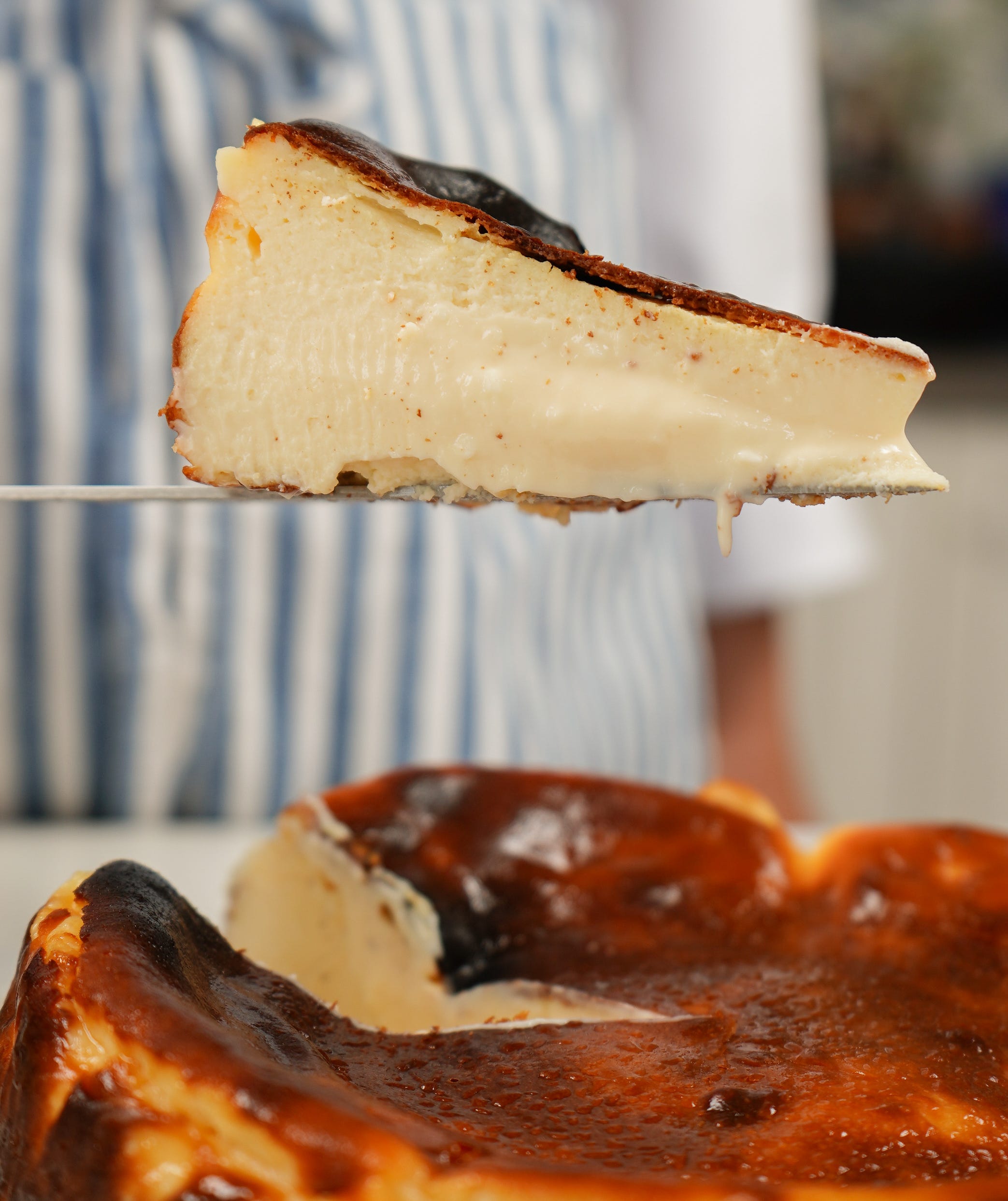
There is a reason this cake keeps coming back. It asks for very little precision in the way a classic cheesecake does, but it still needs attention. The surface should go dark, not politely golden. The center should stay soft and custardy. I like the center soft and custardy, almost spoonable at the very middle. The edges should rise, collapse, and wrinkle as it cools. It is a cake built around contrast: deeply burnished top, pale custard center, a little bitterness against all that cream.
I like it because it is generous without being fussy. No biscuit base, no water bath, no careful decoration. Just cream cheese, eggs, sugar, cream, and enough heat to push everything slightly past where you think it should go. The oven does most of the work, but the timing matters. Pull it too early and it won’t set properly. Leave it too long and you lose the spoonable, almost custardy middle that makes the cake worth making.
This is the version I come back to when I want dessert to feel simple but still complete. It slices cleanly once chilled, but never loses that soft, heavy center. I like it plain, cold from the fridge, with coffee. If anything goes next to it, it should be sharp or barely sweet: roasted fruit, sour cherry, a spoon of thick cream, or nothing at all.
San Sebastian Cheesecake
Serves 8
INGREDIENTS:
300 g cream cheese
300 g mascarpone
190 g sugar
4 eggs
300 ml cream
20 g cornstarch
3 g salt
4 g vanilla extract
Equipment
20 cm springform pan
2 large sheets of parchment paper
Stand mixer with paddle attachment
Rubber spatula
Small mixing bowl
Whisk
Fine sieve, optional
Thin knife for slicing
METHOD
Preheat the oven to 240°C.
Line a 20 cm springform pan with two large sheets of parchment paper, crossing them so the paper rises well above the rim of the pan. The cheesecake will rise dramatically in the oven, then collapse as it cools.
Bring the cream cheese, mascarpone, eggs, and cream fully to room temperature before beginning. This step is essential for a smooth batter and an even bake.
Place the cream cheese and mascarpone in the bowl of a stand mixer fitted with the paddle attachment. Mix on low speed for 2-3 minutes, just until smooth.
Add the sugar and mix on low speed until the mixture becomes completely smooth and glossy for 4-5 minutes. Stop once to scrape the bowl and paddle thoroughly so the mixture blends evenly. The texture should resemble thick frosting with absolutely no visible lumps.
Add the eggs one at a time, mixing on low speed continuously. After the eggs are fully incorporated, stop and scrape the bowl again.
In a small bowl, whisk the cornstarch, salt and cream until smooth, and add this mixture to the batter. Mix on low speed just until smooth, then add the vanilla extract and mix briefly to combine.
For the smoothest texture, pass the batter through a fine sieve into another bowl, then pour it into the prepared pan and tap the pan lightly on the counter to release any large air bubbles.
Let the batter sit for 15–30 minutes at room temperature.
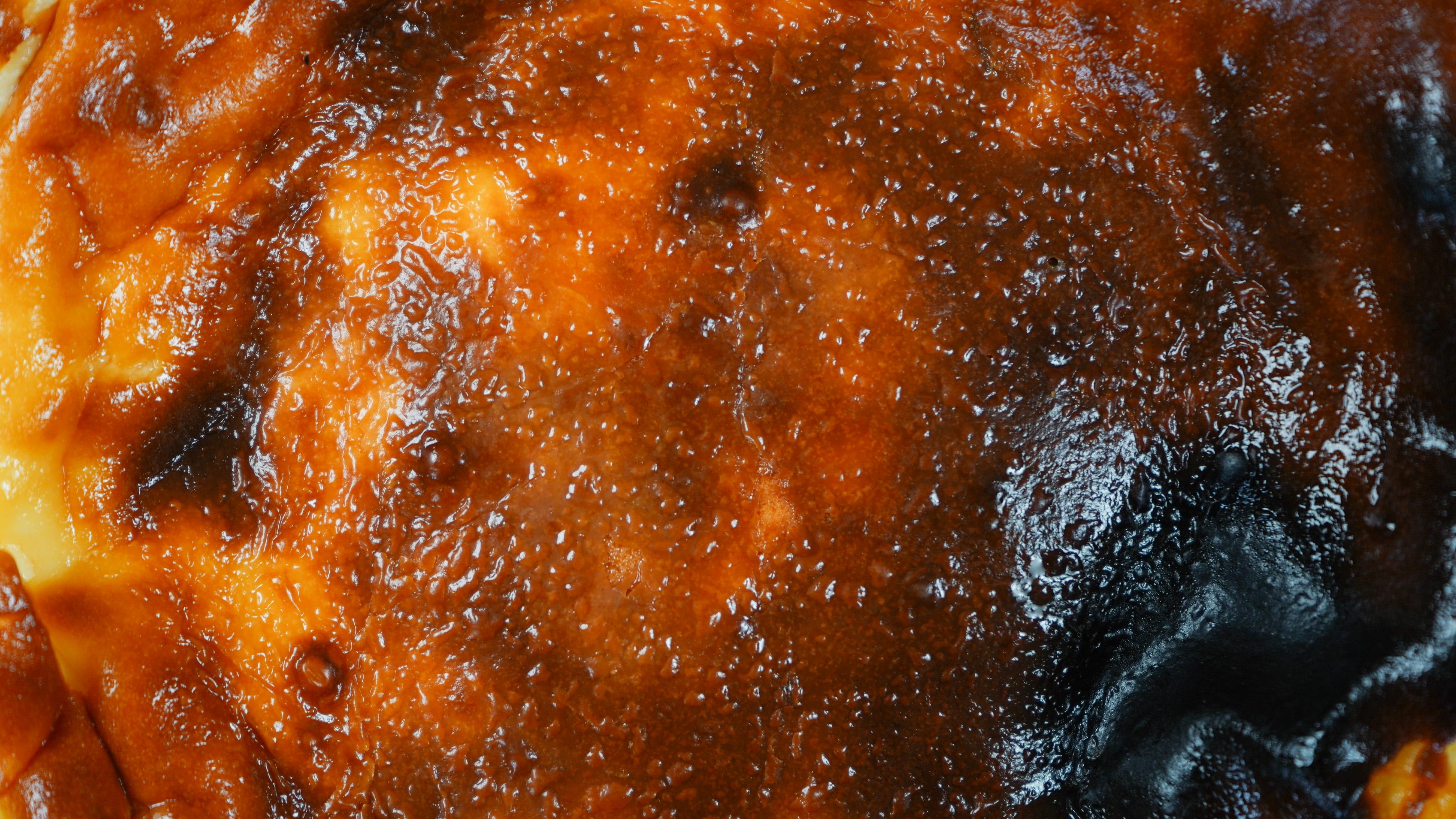
Bake at 240°C for 30-33 minutes, watching the cake rather than relying only on the clock. It is ready when the top is deeply caramelized and almost burnt in places, the edges are set and beginning to pull slightly away from the parchment, and the center still trembles like custard when the pan is gently shaken.
If the center moves like liquid rather than a soft wobble, bake it for a few minutes longer. If the top darkens too quickly before the edges are set, reduce the temperature slightly next time, as home ovens vary considerably.
Let the cheesecake cool completely at room temperature for 3–4 hours, then refrigerate for at least 6 hours, preferably overnight. Slice cold with a thin knife, wiping the blade clean between each cut.

