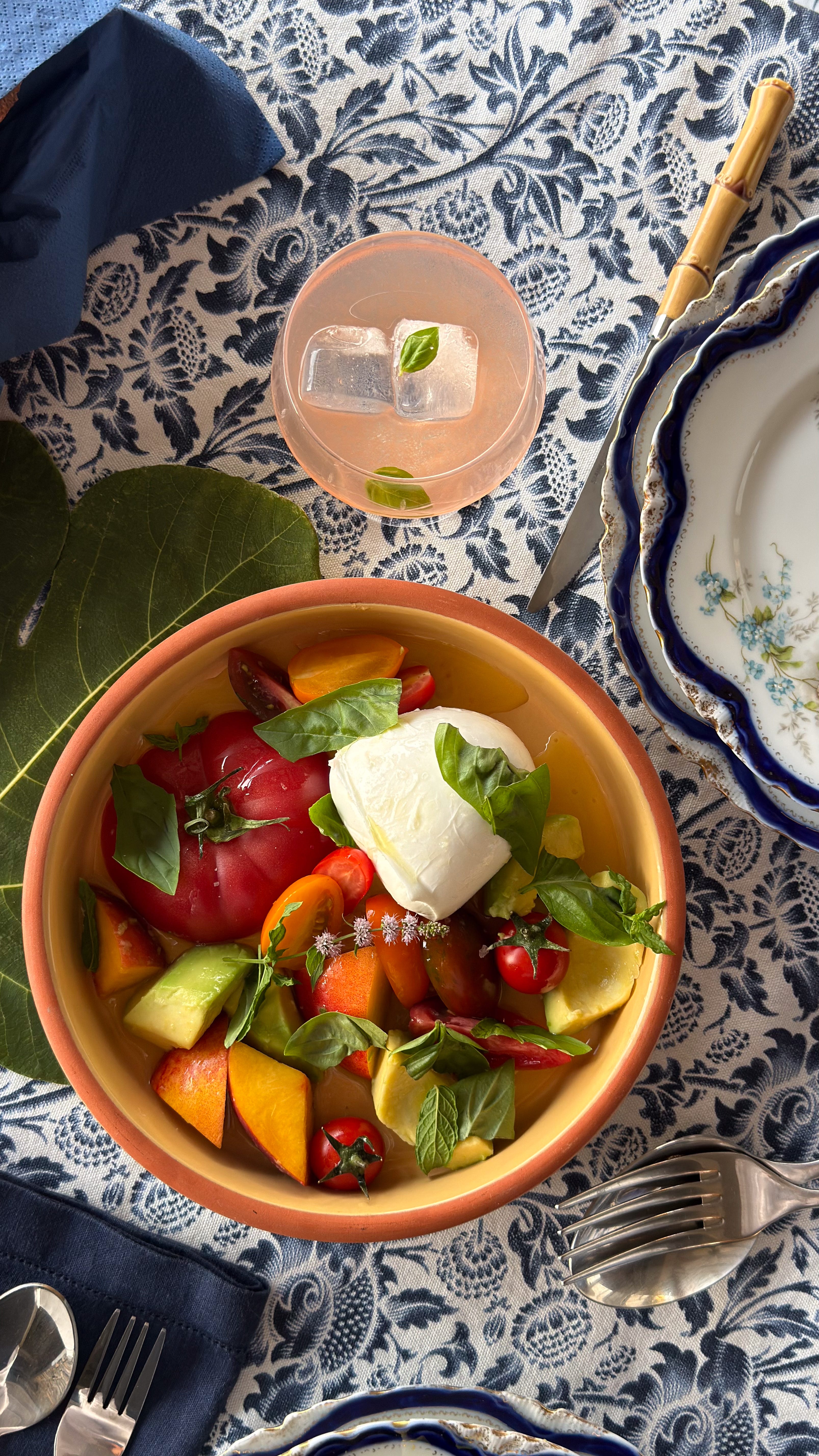
It looks like a glass of rosé and tastes like tomato. That is the whole point of it, and it takes almost no work.
Use tomatoes at the height of summer, as ripe as you can find them. What you want is a tomato that feels heavy for its size, better even if overripe, and gives under your thumb.
Mine comes out a pale pink rather than water-clear, and I’ve stopped trying to correct it. In a small cold glass, I like that faint pink colour, it looks more summery and dreamy. For something closer to clear, strain it a second time through a coffee filter.
You also give nothing up by making it. The pulp left in the sieve still becomes sauce, exactly as it would have done. This is simply a second ingredient out of the same tomatoes.
Tomato Water
Makes about 200 ml
INGREDIENTS:
400 g ripe tomatoes
4 g fine sea salt
Equipment
Kitchen scale
Chopping board
Sharp knife
Large bowl
Fine-mesh sieve
Two layers of cheesecloth
Coffee filter, optional


METHOD
Roughly chop the tomatoes, salt them, and crush with your hands until broken down.
Line a sieve with two layers of cheesecloth, set it over a bowl, tip everything in, and refrigerate overnight. Cheesecloth gives the pale pink liquid I prefer. For something closer to clear, xx a second time through a coffee filter.
Do not press or squeeze. Pressing forces fine pulp through the cloth and clouds the liquid. Let it drip on its own.
Tomato water is at its best the day it is made, so begin making it the night before you intend to use it.
Don’t discard the pulp, it is concentrated tomato flesh. It cooks down quickly into a thick sauce. Turn it into tomato sauce, gazpacho, sofrito or pasta sauce.
You can use it within three days or freeze it for later. Once thawed, it may look more watery at first, but it will still cook down into a thick sauce.
Kitchen Notes
Another method, if you have time, is to cut the tomatoes into cubes and season them with salt. Spread the tomatoes and all their released liquid on a parchment-lined tray. Freeze uncovered until solid. Transfer everything to the lined sieve and leave it to thaw slowly in the refrigerator. Do not press or squeeze.
How to Use It
My favourite way is also the simplest. Season it with lime juice and salt, then serve it chilled in a small glass. Finish with a few drops of good olive oil and serve as an amuse-bouche at the start of a summer meal.
Beyond that, it belongs around raw or lightly cooked seafood: poured over scallops, crab, prawns or white fish, or used in a ceviche or aguachile. It works as a shallow poaching liquid for fish, sets with agar into a savoury jelly, and makes a good cooking liquid for a summer pilaf when you want the rice to taste of tomato.
It can become a vinaigrette by whisking it with olive oil, vinegar, salt, herbs or shallot. It brings its own acidity, so pull back on the vinegar.